
Patrick deWitt's novel "Dodge City" follows Lee Clarke, a young man who loses his college deferment during the Vietnam War and plots a road trip toward Canada rather than the draft. The book turns a dark premise into a sharp, funny and quietly moving study of conscience, family and a country at war with itself.
A Deferment Lost and a Plan Improvised
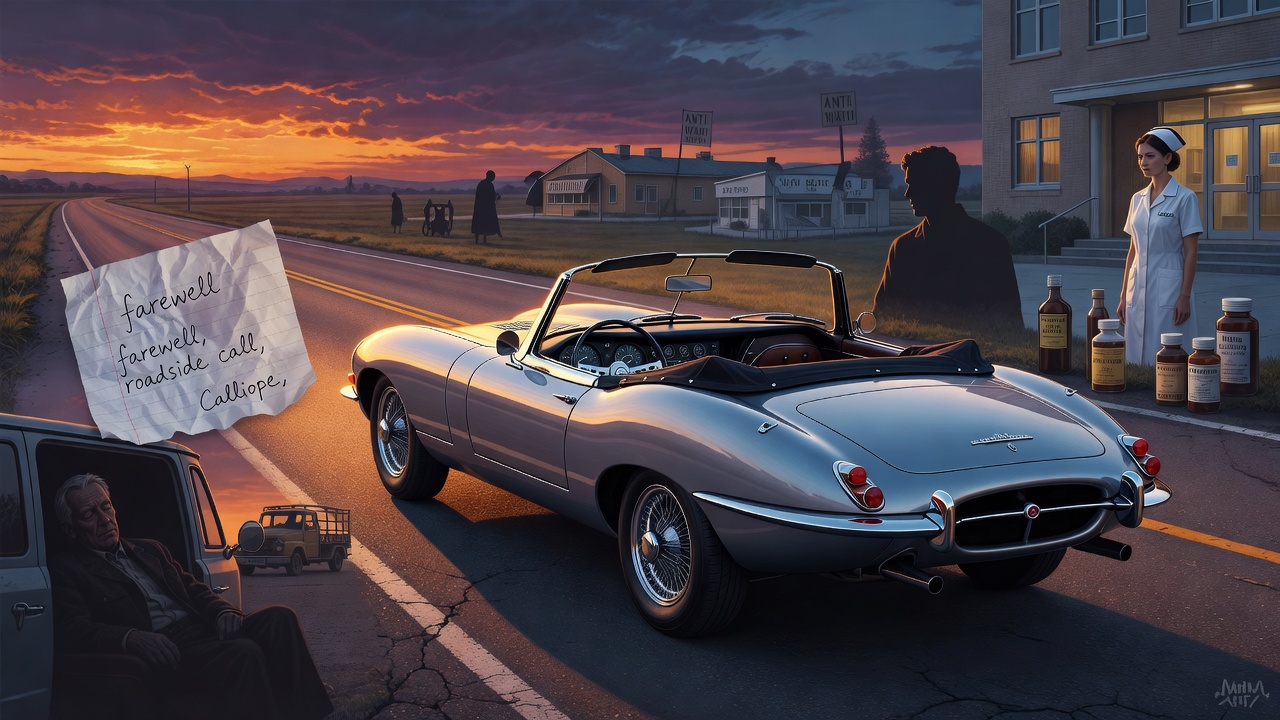
Lee's expulsion from college removes the enrollment protection that had kept him out of the draft, and he is quickly called up. Rather than comply, he sells his belongings and sets out to flee to Canada. His route depends on a deception: he registers with a car-delivery service, talks his way through the interview, and receives a new Jaguar that he is supposed to deliver to a buyer in New Jersey. In reality, he plans to drive it to the Canadian border.
Love, Leaving and a Note on the Door
The one emotional complication in Lee's plan is his girlfriend, Calliope. Her handwritten note, found stuck to his front door, is among the book's most striking passages. Its voice, which deWitt renders with precision, admits she cannot face a formal goodbye and asks whether Lee will call from the road. The note captures how the novel balances restraint and feeling throughout.
A Road Trip Shaped by Family
As Lee drives east with a supply of amphetamines given to him by a friend, the trip becomes a journey through his relatives. He encounters his father, a World War II veteran now working as a dog-catcher, asleep in a van in the driveway of the family home. His mother is unstable, he has been estranged from his brother Harry for years, and his twin sister Grace, a nurse at a Manhattan psychiatric hospital, is the one relative he finds truly relatable. Each encounter adds texture to his search for clarity about the past and his place in the present.
Comedy, Craft and Relevance
DeWitt's prose is controlled and streamlined, and his dialogue, as in his earlier novel "The Sisters Brothers," which was shortlisted for the 2011 Booker Prize, is punchy and believable even in emotional scenes. The book raises the moral questions the draft forced on young men without becoming preachy. Its focus on an ambivalent young person facing an unwanted war gives it a resonance beyond the 1960s setting.