
Andy Stott's latest album pulls his electronic music away from the dancefloor and toward a more polished, song-driven form of nocturnal soul. Across roughly 36 minutes, the record shows both the strength of his atmospheric craft and the risk of settling into a comfortable, predictable sound.
A shift away from the dancefloor
The review places Late Loop within a broader unease in electronic club music, where younger listeners have increasingly gravitated toward rock, pop and rap concerts for collective experience. Rising rents, the closure of underground venues and the institutionalisation of large clubs are cited as pressures pushing dance music toward either mainstream spaces or fragile underground scenes. In that context, artists who never felt fully at home on the floor have room to pursue more elusive, emotive textures.
Looped textures and hidden details
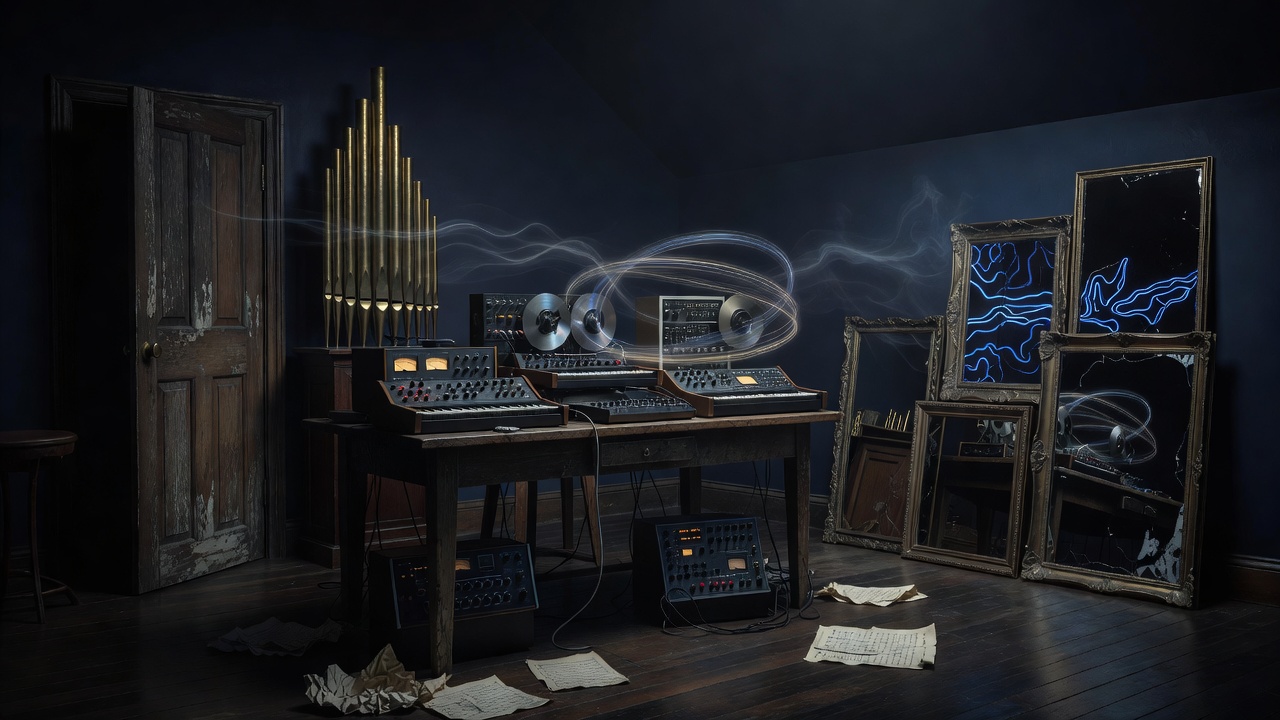
Stott, a Mancunian producer, has long blended house and techno with ambient and post-Industrial textures, a lineage traced back to the dystopian atmosphere of Burial's work. On Late Loop, the looping structures give the album its title and shape, while buried samples add unexpected character. The creaking door in "Sunday fast," the creaking organ and quiet ambience of "The hardest thing," and the carnival-tinged pull of "Mirror Signal" are highlighted as particularly striking moments.
Where the album falls short
The reviewer argues that some tracks stay within their own limits. Ideas that could carry the sinister edge of Coil or the melancholy of Massive Attack instead settle into polished, cosmopolitan gloom, and the title track runs nearly seven minutes without reaching the depth it promises. The edgy "2024-2" hints at a more fractured direction but never achieves its intended climax. Vocal contributions from Elaine Howley and Alison Skidmore add emotional weight, yet the album as a whole can feel unfinished, sitting uneasily between a complete statement and a collection of drafts.